Pavers are one of the most popular ways to build a patio, walkway or driveway around Pittsburgh, and for good reason. They come in hundreds of colors, shapes and textures, they handle heavy use, and a single damaged paver can be lifted out and replaced instead of tearing out the whole surface. But the paver you pick is only half the decision. How it’s installed matters just as much, especially with Western Pennsylvania winters.
This guide walks through the main choices homeowners face, what holds up best here and what to ask any contractor before you sign.
Concrete, Clay Brick or Natural Stone?
Most residential projects use one of three materials:
- Concrete pavers are the most common choice. They’re made in molds, so sizes are consistent, and they come in a wide range of colors and finishes, from smooth modern slabs to tumbled pavers that look aged. Quality concrete pavers are very dense and strong, which helps them stand up to freeze-thaw cycles better than a poured concrete slab.
- Clay brick pavers give the classic red-brick look you still see on many older Pittsburgh streets and homes. The color is fired through the brick, so it doesn’t fade the way some dyed products can. Shape and size choices are more limited.
- Natural stone such as bluestone, flagstone or travertine has a high-end look that suits traditional homes and garden settings. It usually costs more, and some softer stones are less tolerant of de-icing salt, so ask how a specific stone performs outdoors in a freeze-thaw climate.
There’s no single right answer. Concrete pavers give the most design flexibility for the money, brick suits older homes and neighborhoods, and natural stone is a premium option for patios and walkways where you want a natural look.
Matching the Paver to the Job
Walkways
Walkways need a comfortable, slip-resistant surface. Avoid very smooth or glossy finishes on paths that stay shaded and damp, and consider a contrasting border to define the edges. A main walkway to the front door should be wide enough for two people to walk side by side.
Patios
Patios are where you have the most creative freedom: larger-format slabs, mixed sizes, inlays and borders all work well. Think about how you’ll use the space. A patio for a dining table and grill needs more room than you might expect once chairs are pulled out, and a fire pit area needs clearance all the way around.
Driveways
Driveways carry vehicle loads, so the paver and especially the base have to be built for it. Driveway pavers are typically thicker than patio pavers, and smaller units laid in a herringbone pattern resist the turning and braking forces from tires better than long rectangles laid in straight rows.
Pool decks and steps
Around pools, look for textured surfaces that stay cooler underfoot and give good traction when wet. Steps need consistent riser heights and solid, well-supported treads.
Color, Pattern and Style
A few practical tips help the finished project look intentional:
- Pull colors from your house. Match or complement the roof, trim or stone on your home rather than choosing a paver in isolation.
- Look at full-size samples outdoors. Colors look different in a showroom than in sunlight next to your siding and lawn.
- Blended colors hide dirt. Multi-tone pavers show leaves, tire marks and wear less than a single solid color.
- Use a border. A soldier course or contrasting border frames a patio or walkway and makes it look finished.
- Choose the pattern for the use. Herringbone is the strongest choice for driveways; running bond and stacked layouts give a cleaner, modern look on patios and walks.
Why Installation Matters More Than the Paver
Most failed paver projects don’t fail because of the pavers. They fail because of what’s underneath. Around Pittsburgh, clay-heavy soil holds water, and repeated freezing and thawing can heave a poorly built surface, leaving it uneven, sunken or rocking underfoot. A paver surface built to last generally includes:
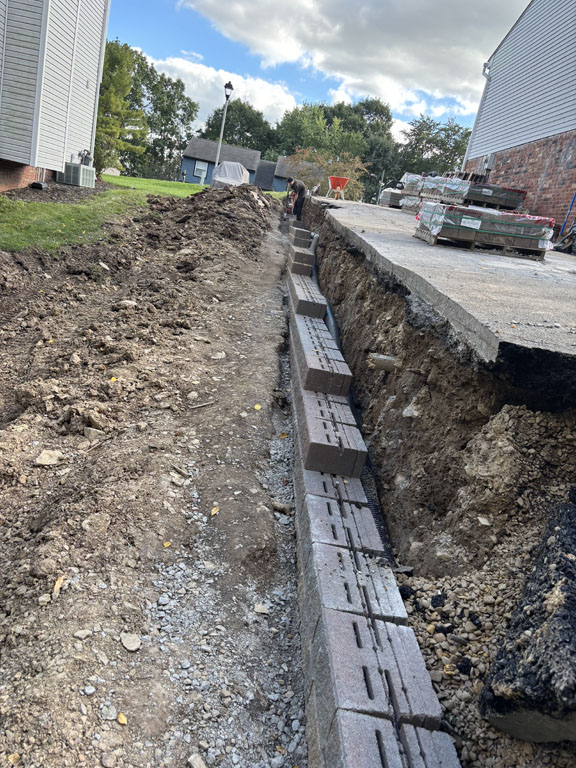
- Excavation to the right depth. Topsoil and organic material are removed so the base sits on stable ground. Driveways need a deeper excavation than patios and walkways.
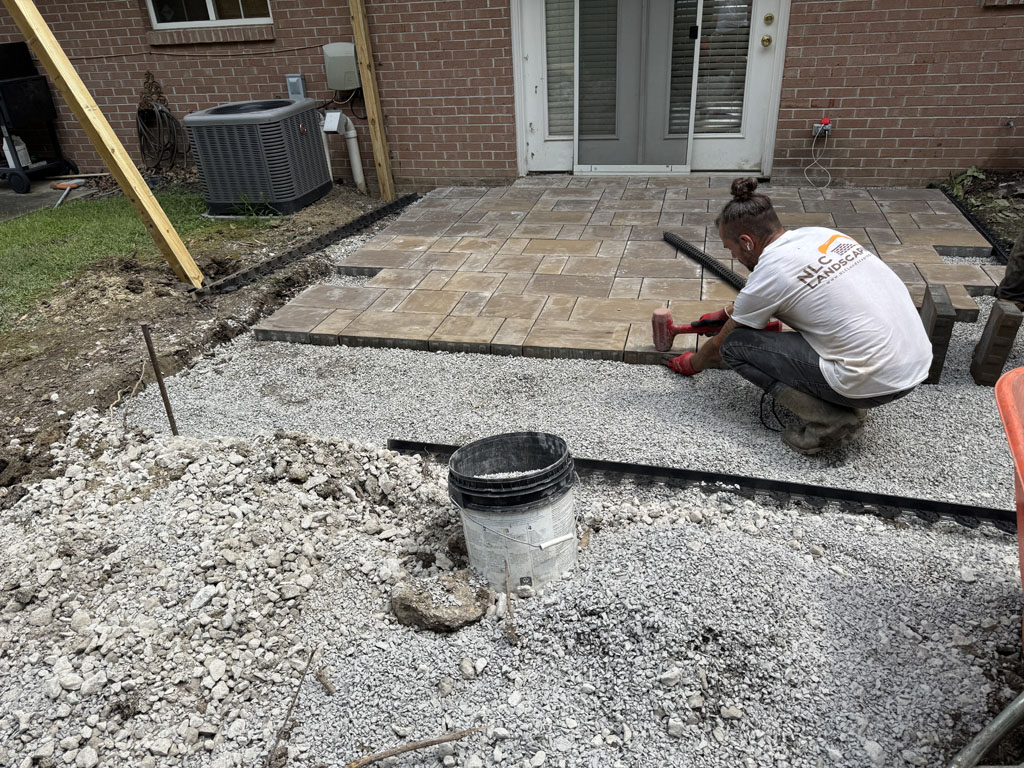
- A compacted crushed-stone base. Angular crushed stone is placed in layers and compacted with a plate compactor, one layer at a time. This base carries the load and lets water drain away.
- A thin, level bedding layer. A screeded layer of coarse sand or fine aggregate gives the pavers an even bed.
- Proper slope. The surface should pitch slightly away from the house so rainwater runs off instead of toward your foundation.
- Edge restraint. A concrete or commercial edge restraint keeps the outer pavers from spreading over time.
- Joint sand and final compaction. Sand, often polymeric sand, is swept into the joints and the surface is compacted again so the pavers lock together.
Shortcutting any of these steps can save money up front, but it usually shows up within a few winters as settling, weeds in the joints and pavers that shift.
Pavers vs. Poured Concrete
Poured concrete often costs less up front, but it’s one rigid slab. When the ground moves, it cracks, and repairs are hard to hide. Interlocking pavers flex slightly with the seasons because each unit can move a little without breaking, and any damaged piece can be lifted and replaced with a matching one. For many Pittsburgh homeowners, that long-term repairability is the deciding factor.
Permeable Pavers
Permeable pavers have wider joints filled with small stone, so rainwater soaks through the surface into a specially built stone base instead of running off. They can help where runoff is a concern, though they need a different base design and some maintenance to keep the joints from clogging. If water is already pooling in your yard, a drainage solution such as a French drain may need to be part of the plan. Our guide on how a French drain protects your home explains the options.
Caring for a Paver Surface
- Sweep regularly and rinse off dirt and leaves.
- Top up joint sand if it washes out, so the pavers stay locked together.
- Pull or treat weeds early, before roots open up the joints.
- Use a plastic shovel blade in winter, and check with the paver manufacturer about which de-icers they recommend.
- Sealing is optional. It can deepen color and resist stains, but it needs to be redone periodically.
Questions to Ask Before You Hire a Contractor
- How deep will the base be, and what material will you use?
- How will the base be compacted, and in how many layers?
- What edge restraint do you use?
- How will the surface be sloped to move water away from the house?
- Are you a registered Pennsylvania Home Improvement Contractor, and are you insured?
Any contractor should be able to answer these clearly. NLC Landscaping is a registered Pennsylvania Home Improvement Contractor (#PA182877) and fully insured, and we’re happy to walk you through how we’d build your project.
Planning a Paver Project?
Whether it’s a front walkway, a backyard patio or a new driveway, we can help you choose materials and build it on a base that holds up to Pittsburgh winters. See our paver installation services, browse recent projects or request a free estimate.