Water pooling in your yard is more than an eyesore. Around Pittsburgh, heavy clay soil, hillside lots and older homes make drainage problems common. Excess water can wash out soil, kill grass, undermine patios and retaining walls, and find its way into basements. A French drain is one of the most effective ways to collect that water and move it somewhere safe.
What Is a French Drain?
A French drain is a gravel-filled trench with a perforated pipe at the bottom. Water soaks into the gravel, enters the pipe through the perforations and flows downhill through the pipe to an outlet away from your home. The trench is usually lined with landscape filter fabric so soil doesn’t wash in and clog the gravel and pipe over time.
From the surface, a finished French drain can look like a strip of decorative stone, or it can be covered with soil and sod so it disappears into the lawn.
Signs You Might Need One
- Puddles or soggy areas that stay wet for days after rain
- Water running across the yard toward the house during storms
- A damp or wet basement, or water stains on basement walls
- Soil washing out, exposed roots or mulch carried away
- Moss, mushrooms or dead patches in low spots of the lawn
- Patios, walkways or retaining walls that are settling or heaving
- Ice sheets forming in the same spots every winter
Why Drainage Problems Are So Common Around Pittsburgh
Much of the region sits on clay-heavy soil that absorbs water slowly. Many homes are also built on or below hillsides, so water from uphill naturally runs toward them. Older homes may have downspouts draining right next to the foundation, or connected to old underground lines that no longer work. Freeze-thaw cycles make things worse, because trapped water expands when it freezes and can heave soil, pavers and walls.
How a French Drain Works
A French drain only works if water has somewhere lower to go. That’s why a good design starts with the outlet and works backward:
- Find the source and the path. Where is the water coming from, and where does it collect? Roof runoff, a neighbor’s slope, a high water table and poor grading each call for a different approach.
- Choose a safe outlet. Water can be carried to a lower part of the property where it exits at grade (called “daylighting”), to a dry well or to another approved discharge point. Local rules control where stormwater can go, and it generally can’t be tied into a sanitary sewer line.
- Dig the trench with a consistent slope. The trench and pipe need a continuous downhill pitch toward the outlet so water doesn’t sit in the pipe.
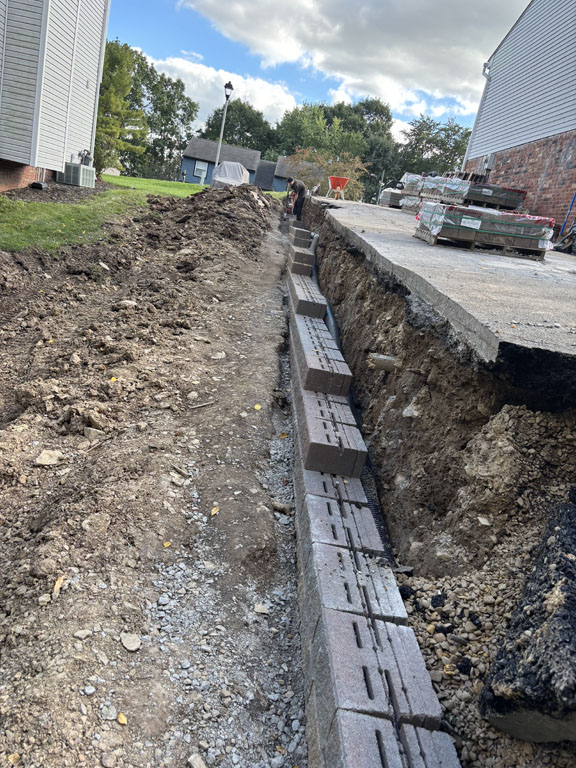
- Line, fill and lay the pipe. Filter fabric lines the trench, a layer of washed gravel goes in, then the perforated pipe, then more gravel. The fabric is folded over the top to keep soil out.
- Finish the surface. The top can be left as decorative stone or covered with soil and sod.
Getting the slope and the outlet right is the difference between a drain that works for decades and one that simply holds water underground.
Yard, Curtain and Foundation Drains
“French drain” is used for a few related systems:
- Yard drains run through soggy areas of the lawn to collect standing water.
- Curtain drains are placed uphill of the house or a problem area to intercept groundwater and runoff before it gets there.
- Foundation (footer) drains run along the base of the foundation and are often part of basement waterproofing work.
If water is coming through basement walls, the foundation itself may also need attention, so it’s worth understanding where the water enters before choosing a fix.
When a French Drain Isn’t the Answer
Sometimes a simpler fix solves the problem:
- Downspout extensions or buried downspout lines that carry roof water well away from the house
- Regrading so the soil slopes away from the foundation
- A dry creek bed or swale that guides surface water across the yard
- Catch basins that collect water at low points and pipe it away
In many yards the best result comes from combining a few of these. That’s why every project should start with an assessment rather than a one-size-fits-all solution.
Drainage and Retaining Walls
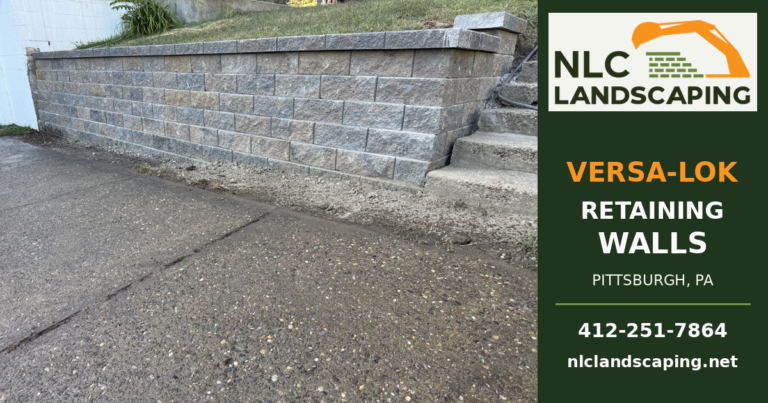
Water is the most common reason retaining walls fail. A wall holding back wet clay soil with no drainage behind it is under constant pressure, and that pressure increases when the water freezes. A properly built retaining wall includes drainage stone and a drain pipe behind it, and if an existing wall is leaning, poor drainage is one of the first things to check. Learn more in our guide What Is a Retaining Wall, and Does Your Yard Need One?
What Affects the Cost of a French Drain
Every drainage project is priced on the property, but the main factors are predictable:
- Length and depth of the trench. A short yard drain costs far less than a long curtain drain that runs the width of a property.
- Distance to a safe outlet. If the nearest place water can exit is far away or uphill, more pipe and digging are needed, or a different solution may be better.
- Soil and access. Rocky ground, heavy clay, tight side yards and limited equipment access all add labor.
- What’s in the way. Patios, walkways, fences, utility lines and mature trees have to be worked around or removed and restored.
- Surface restoration. Finishing with decorative stone, new topsoil and seed, or fresh sod each changes the scope.
- Related work. Connecting downspouts, adding catch basins or regrading part of the yard is often done at the same time.
An on-site visit is the only way to get an accurate number, because the right design depends on where the water comes from and where it can go.
How Long Does a French Drain Last?
A well-built French drain can work for decades. The things that shorten its life are almost always installation shortcuts: no filter fabric, so soil slowly clogs the gravel; pipe laid without a consistent slope, so water and sediment sit in low spots; or an outlet that gets buried or blocked. Using washed stone, wrapping the trench in fabric, keeping a steady pitch and building an outlet that stays clear are what keep a drain working year after year.
Keeping a French Drain Working
- Keep the outlet clear of leaves, debris and soil so water can exit.
- Keep gutters and downspouts clean so roof water reaches the system it was designed for.
- Avoid planting trees or large shrubs directly over the drain, since roots can grow into the pipe.
- If the system has a cleanout, flushing it occasionally helps keep the pipe clear.
Questions to Ask a Drainage Contractor
- Where will the water go, and is that outlet allowed?
- How will you make sure the trench has a continuous slope?
- Will you use filter fabric and washed gravel?
- Do you also look at grading and downspouts, or only install drains?
- Are you a registered Pennsylvania Home Improvement Contractor, and are you insured?
NLC Landscaping is a registered Pennsylvania Home Improvement Contractor (#PA182877) and fully insured, serving homeowners in Carnegie, Pittsburgh and nearby communities.
Dealing With Standing Water?
We’ll look at where the water is coming from, where it can safely go and which solution makes sense for your property. Read more about our French drain installation services, see recent projects or request a free estimate.